
If you have been getting quotes for crawl space work, you have probably heard two words thrown around like they mean the same thing: waterproofing and encapsulation. They do not. They solve different problems. Waterproofing deals with liquid water getting into the space. Encapsulation deals with sealing the space and controlling the humidity that hangs in the air. Plenty of homes need one. Plenty need both. Here is how to tell the difference so you are not paying for something you do not need, or skipping something you do.
What crawl space waterproofing actually means
Waterproofing is about managing liquid water. When it rains hard in Northeast Georgia, water finds its way under your house through foundation walls, footing seams, and the dirt floor. Waterproofing is the system that catches that water and moves it back out before it pools.
A real waterproofing setup usually includes a few pieces working together:
- Interior drainage: a channel or perforated pipe along the footing that collects water as it enters.
- A sump pump: a basin and pump that pushes collected water away from the foundation.
- Exterior grading and downspout fixes: making sure the ground slopes away from the house and gutters dump water far enough from the foundation.
If you see standing water after storms, water stains on the foundation walls, or a sump pump that runs constantly, waterproofing is the conversation you need to have. You can read more about how we approach this on our crawl space waterproofing page.
What crawl space encapsulation actually means
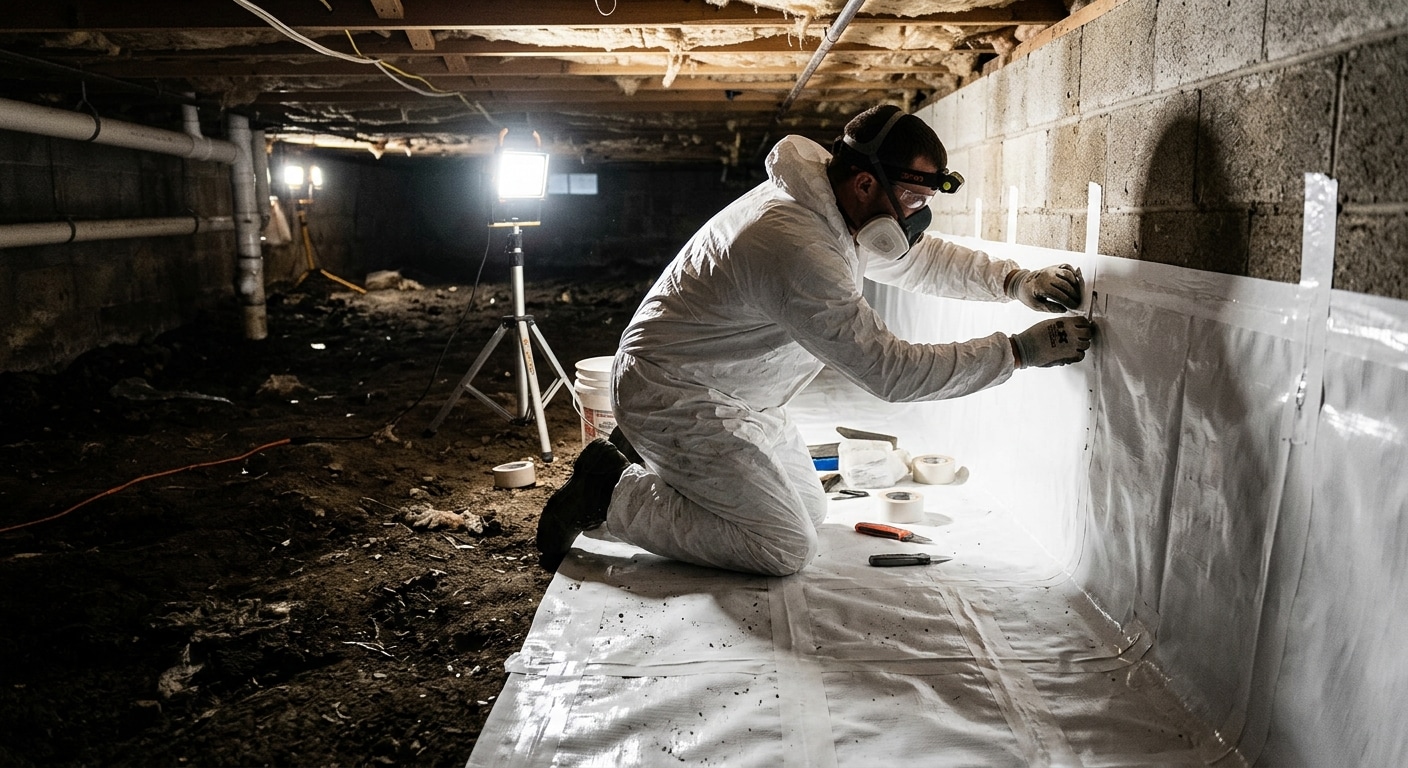
Encapsulation is about sealing the crawl space off from the ground and the outside air, then controlling the moisture in the air. The dirt under your house gives off water vapor around the clock. Vents that were supposed to dry the space out usually do the opposite in a humid Georgia summer, pulling damp air right in.
A full encapsulation typically includes:
- A heavy-duty vapor barrier: thick reinforced liner across the floor and up the walls, sealed at the seams. See our vapor barrier page for the detail on this.
- Sealed vents and access points: closing off the outside air that was feeding humidity in.
- A dehumidifier: a unit sized for the space that holds the air at a level where mold and rot cannot get going.
If your problem is musty smells, high humidity readings, condensation on ductwork, mold on joists, or soft wood, that is a moisture-in-the-air problem. Encapsulation is built for that. Full details live on our crawl space encapsulation page.
Waterproofing vs encapsulation: the short version
Here is the cleanest way to keep them straight:
- Waterproofing handles water you can see and step in. Liquid water coming through the walls or floor.
- Encapsulation handles water you cannot see. Vapor and humidity in the air that rots wood and grows mold over time.
Think of it this way. Waterproofing keeps the flood out. Encapsulation keeps the swamp out. A space can be bone dry after a storm and still be a humid, moldy mess in August. The reverse is also true. You can have a tight, sealed crawl space that still floods because nobody dealt with the drainage. They are two different jobs.
When you need one versus both
Most of the homes we inspect around Athens and Northeast Georgia fall into one of three buckets.
Waterproofing first
If you have active water intrusion, drainage comes first. There is no point sealing a vapor barrier over a floor that floods. The water will sit under the liner, and you will have wasted the encapsulation. Stop the liquid water, then control the air.
Encapsulation only
Some crawl spaces never take on standing water but stay damp and humid year-round. No flooding, just chronic moisture in the air, musty smell, maybe early mold. These homes often do fine with encapsulation alone, sometimes with a basic vapor barrier and a dehumidifier.
Both, working together
Honestly, a lot of Georgia homes need both, and we will tell you straight if yours does. Waterproofing stops the liquid water from getting in. Encapsulation seals the space and dries the air. Together they cover the whole problem instead of half of it. This is the most common real-world outcome, because our climate throws both heavy rain and heavy humidity at your house.
What a free inspection determines
You should not have to guess which one you need, and you should not let anyone sell you a package before they have looked under your house. A real inspection figures out:
- Whether you have active liquid water intrusion and where it is coming from.
- What your humidity levels actually read, not a guess.
- Whether there is existing mold, rot, or wood damage.
- The condition of any existing vapor barrier, drainage, or sump pump.
- How your grading and gutters are feeding water toward the foundation.
From there you get a clear answer: waterproofing, encapsulation, or both, and a price. Our inspections are free with no trip charge, and we serve homeowners across Athens, GA and the surrounding area. Crawl space projects generally run between $6,000 and $15,000 depending on the size of the space and the scope, and you get the exact number after the inspection, not before.
Frequently asked questions
Can I just do encapsulation and skip waterproofing?
Only if you do not have liquid water getting in. If your crawl space floods or pools after rain, sealing it without drainage traps water under the barrier and makes things worse. The inspection tells you which situation you are in.
Does encapsulation stop water from coming in?
No. A vapor barrier blocks ground vapor and a dehumidifier dries the air, but neither one manages liquid water pushing through the foundation. That is what waterproofing and drainage are for. This is exactly why a lot of homes need both.
How long does this work last?
A properly installed system holds up for years. Our work comes with a 5-year warranty and a 100 percent satisfaction guarantee, so you are not left wondering whether it was done right.
How much does it cost?
Most crawl space projects fall between $6,000 and $15,000. The exact price depends on the size of your space and whether you need waterproofing, encapsulation, or both. You get a firm number after a free inspection, never a vague estimate over the phone.
If you are not sure whether your crawl space needs waterproofing, encapsulation, or both, the fastest way to find out is to have someone actually look. Crawl Space Doctors is family-owned and owner-operated, no franchise, and the inspection is free with no trip charge. Call us at 706-608-7179 and we will tell you straight what your home needs and what it costs.