Fall crawl space maintenance in northeast Georgia is mostly a twenty minute walkaround you can do yourself, and the reason to do it now is that September is still humid enough to show you the problems while there is time to fix them. Most people have not looked under the house in years. The access door is half off its hinges, the last person under there was the guy who ran the cable, and it is a lot easier to keep not looking. What follows is a short checklist and a clear line between what you can judge from where you stand and what you cannot.
Why September Is the Right Month for This in Northeast Georgia
The air stays heavy here well into fall, and the ground under the house stays cool because it never dries out the way exposed soil does. The conditions that drive condensation under a floor are still running in September, which is precisely why this is the month to look.
That means the problems are still visible. A crawl space checked in January can look deceptively fine, not because anything got fixed but because the weather stopped pushing on it.
There is a practical argument too. Fall rain and leaf drop are coming. Gutters, grading and a failed vapor barrier all get worse from here, not better.
The order below is outside first, then the access door, then under the house only if it is safe to go.
What You Will Need
- A bright flashlight, brighter than a phone light
- Old clothes and gloves you do not mind losing
- A dust mask if you go under the house
- Your phone for photographs of anything questionable
- A screwdriver for the access door hardware
- A notepad, because you will forget half of it
Would rather someone else crawl under there? Crawl Space Doctors does free inspections. Book one online.
The Fall Walkaround, Step by Step
- Walk the perimeter and watch where water goes. Look at how the ground slopes in the first several feet away from the foundation. Ground that falls toward the house sends every rain underneath it. Check your downspouts next, because an extension that dumps at the corner of the foundation is one of the most common causes of a wet crawl space in this area. Note flower beds and mulch piled above the siding line, and any low spot that holds water after a storm. Photograph anything that looks like water has been running there.
- Inspect the foundation vents and the access door. Count the vents and note whether each one is open, screened, broken, or missing its cover entirely. Look for rust stains, silt lines and debris caught in the vent wells, all of which say water has been in there at some point. Check that the access door actually seals and latches, because a crawl door standing open is an invitation for water, animals and outside air all at once. If the door is missing or rotted through, that is the first thing to fix regardless of what else turns up.
- Check the signals you can read from inside the house. Walk the first floor barefoot and note any room that feels cooler and damper than the rest. Look for floors that flex or feel soft near exterior walls and under bathrooms. Note any door that has started sticking in the last year, since seasonal movement in a floor system usually begins with moisture. A musty smell is a moisture signal worth writing down and taking seriously as a condition under the house.
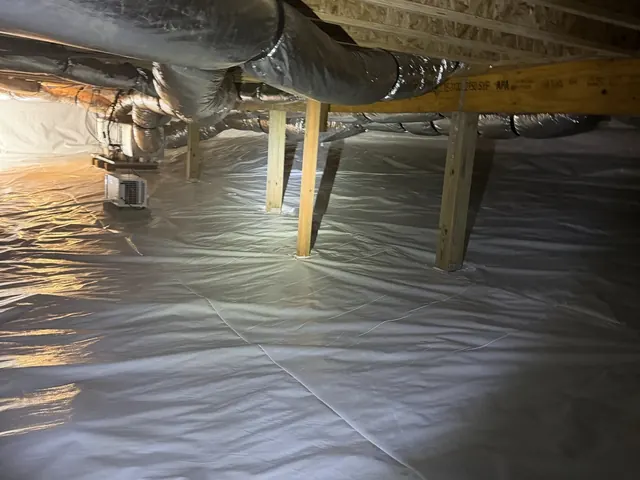
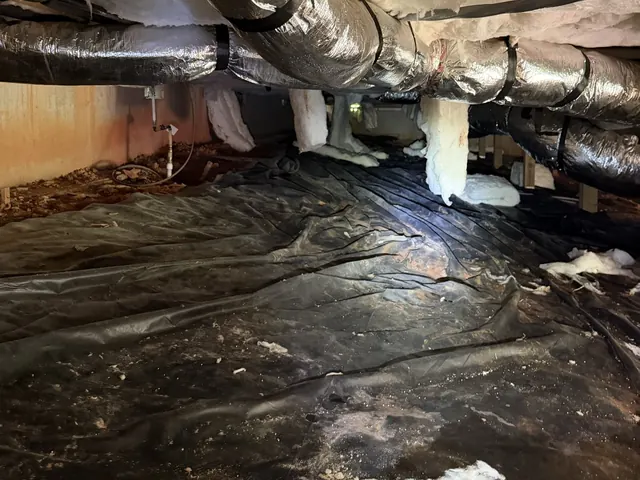
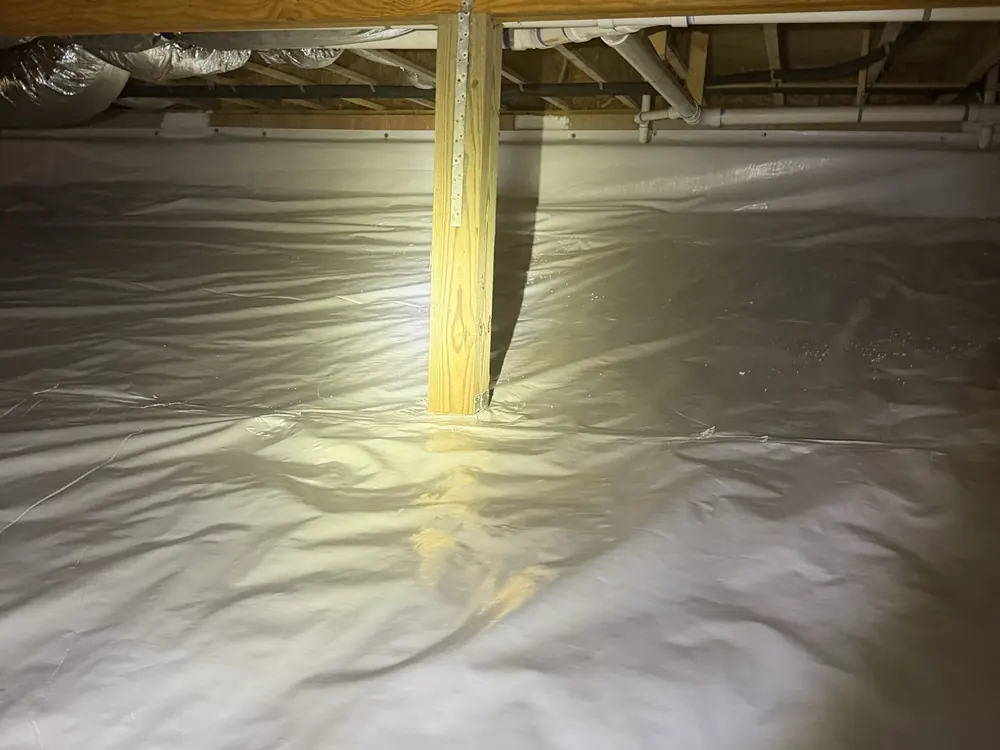
- If it is safe, look under the house with a flashlight. Only go in if the access is sound, the space is tall enough, and there is no standing water or exposed wiring. Otherwise stop at the doorway and photograph from there. Look at the ground cover first: is there a vapor barrier at all, is it torn, has it pulled back, or is it bare dirt. Then look for standing water, damp soil, and silt fans that show you where water comes in. Look up at the subfloor and joists for staining, and at the ducts for condensation.
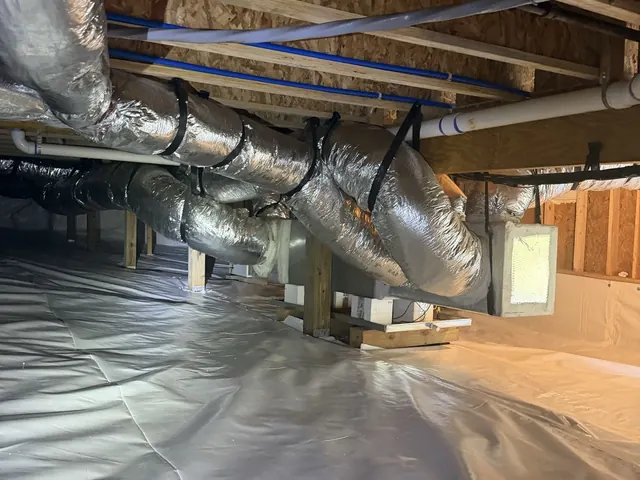
- Note the insulation, the ducts and anything mechanical. Check whether insulation is in place, sagging, or lying on the ground, because fallen insulation is a moisture signal and not a stapling failure. Look at duct runs for disconnected sections, crushed flex and wet insulation. Check any existing dehumidifier for a full pan, a disconnected drain line, or a unit that somebody simply unplugged. Then write down what you saw and where, and get out. This list is the agenda for a professional look, not a diagnosis.
When to Stop and Get Someone Under There
Stop and call if you find standing water, floors that sag or bounce, visible growth on wood, an access you cannot safely enter, or anything electrical sitting in a wet space. None of those get better with another season of waiting.
Be honest about the limit of a walkaround too. You can see the signs from the doorway. You cannot trace where water enters, and you cannot judge the condition of framing from there.
Crawl Space Doctors is owner operated, not a franchise. The free crawl space inspection puts someone under the house and produces a written, no obligation quote if work is warranted. No charge for the inspection, no pressure.
Serving Athens, Madison, Monroe, Watkinsville, Gainesville, Augusta, Elberton and Hartwell. Book a free inspection.
FAQs About Seasonal Crawl Space Checks
Q: Should I close my foundation vents for the winter?
A: Closing vents seasonally is a coin flip in this climate, because it helps in some months and traps moisture in others. A crawl space that needs its vents managed by hand is really telling you it wants to be sealed and controlled instead.
Q: How often should a crawl space be checked?
A: A homeowner walkaround twice a year, spring and fall, catches almost everything that changes. A professional look is worth booking when something on your list changes, or when the house has never been properly assessed.
Q: Does a crawl space problem show up on a home inspection?
A: Sometimes, and often only as a note. A general inspection covers the whole house in a few hours, so a tight or wet crawl space frequently gets a limited or inaccessible remark rather than a real assessment.
Book the Look Before the Rain Comes
Bring the notes and the photographs from your walkaround to a free crawl space inspection, and get an answer while the weather is still showing you what is wrong. Book a free inspection. No obligation, no pressure.