What Is the Difference Between a Vapor Barrier and Full Encapsulation?
The vapor barrier vs encapsulation decision is usually presented as a comparison of two products when it is really a question about one crawl space. And the crawl space answers it before anybody quotes anything. A vapor barrier covers the ground so soil moisture stops evaporating upward. Full encapsulation seals the entire crawl space, ground and walls, closes the vents, and manages what is left with a dehumidifier.
The rule is that short. A barrier addresses moisture coming up from the ground. Encapsulation addresses moisture coming from everywhere. Most homeowners arrive at this comparing crawl space encapsulation vs vapor barrier and expecting one of them to win outright. In a Georgia home the honest answer depends on the space, and the sales answer and the correct answer differ often.
Why the Right Choice Depends on What the Crawl Space Is Doing
Three things decide it. Whether liquid water arrives, how the vents behave through a northeast Georgia summer, and whether the ductwork and floor insulation already show damage.
Open foundation vents let humid summer air into a space cooler than the air outside, and that difference is when condensation forms on the ducts and the framing. Soil moisture is only half the story. Water vapor arriving through the vents is the other half, and closing the vents without sealing and drying the space makes the problems worse.
October is when most homeowners get a quote for work that lands around winter. These conditions push a house toward full encapsulation and real moisture control:
- Standing water or mud after heavy rain, which points to drainage issues first
- Ductwork sweating in summer, or floor insulation sagging out of the joists
- A musty smell reaching the living space through gaps in the floor
- Humidity that stays high under the house long after the ground looks dry
The Questions Homeowners Ask When Choosing Between the Two
What Does a Vapor Barrier Do, and What Does It Not Do?
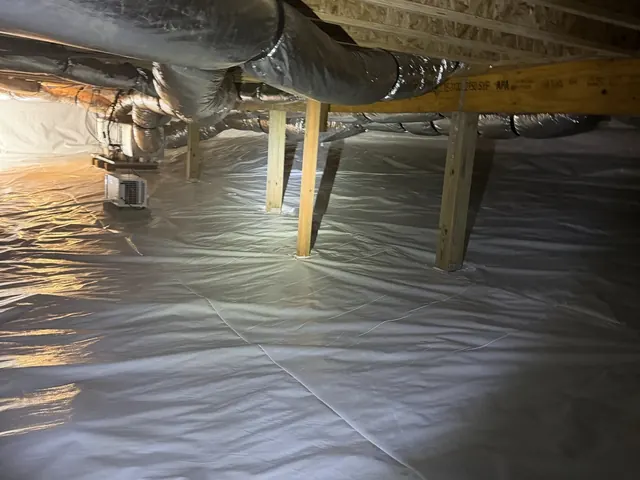
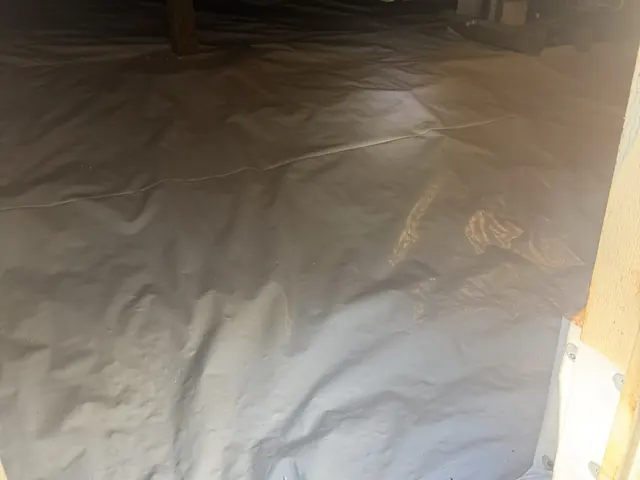
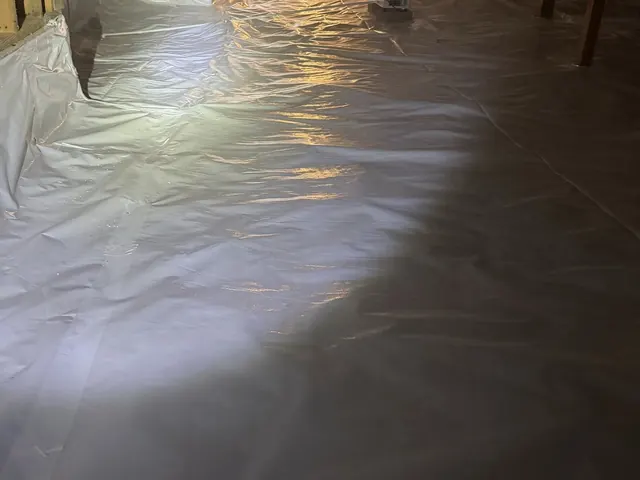
A crawl space vapor barrier stops ground moisture evaporating upward, and in a dry, well drained space that is often enough. It is a plastic sheet run across the soil, lapped at the seams and carried a short way up the piers.
Crawl space vapor barriers do not prevent humid outside air from coming through open vents. They do not stop liquid water either. A liner over wet ground moves the water underneath the plastic instead of removing it, so a barrier over a drainage problem is a cover rather than a fix.
What Does Full Encapsulation Add?
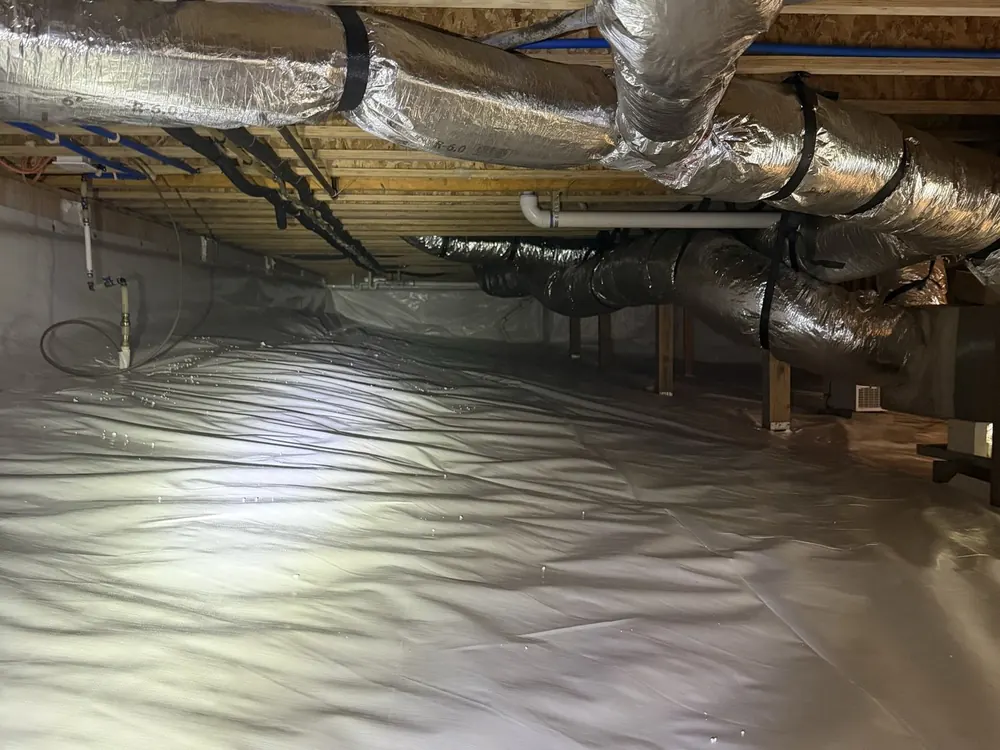
Full encapsulation seals the walls as well as the ground, closes the vents, details the penetrations, and adds a dehumidifier. Quotes for encapsulation crawl space work should name all of those, and the wall line is the part most often left out.
Once sealed, the space becomes part of the building rather than part of the outdoors. That is why the dehumidifier is not optional, and why the installation has to account for the energy that equipment uses. It also changes the air quality of the space itself, because what sits under the floor stops being outdoor air.
Does Liner Thickness Actually Matter?
Yes, and it matters most where people crawl and where things get stored. The 6 mil vs 20 mil vapor barrier question comes up on nearly every quote, and thickness is a use decision, not a quality ranking.
A thicker plastic changes:
- Puncture resistance where technicians, storage, and pest control work cross the floor
- Seam integrity, because heavier material holds a seam under handling
- Whether the space is usable for storage at all
- Whether the material carries a manufacturer warranty
Those are the pros of going thicker, and the benefits are practical. Ask which thickness is best for how your space gets used.
Does an Encapsulated Crawl Space Still Need Insulation?
Usually yes, and it moves. In an encapsulated crawl space the insulation belongs on the foundation walls rather than between the floor joists, because the space now sits inside the thermal boundary of the house.
Old batts left between the joists are the most common leftover from a half finished job. Once the space is sealed, they separate the floor from air the house already spends energy on. A proper installation moves the insulation to the wall line and takes the old material out.
When Is a Vapor Barrier the Honest Recommendation?
When the space is dry, the grading carries water away, there is no history of standing water, and the wood shows nothing. No wood rot in the joists, no visible mold on the framing, no sagging subfloor. In that space a barrier does the job, and that is what you should be told.
Two caveats. If the framing shows structural damage, that belongs to a different trade and gets referred out. And if a space is close but not quite there, partial encapsulation is real. Barrier now, wall sealing later, with the sequence written into the scope so the first stage is not wasted.
Not sure which side of that line your crawl space falls on? Book a free crawl space inspection and get a written answer first.
Getting a Written Scope Before You Choose
A written scope is what makes this decision checkable. It should name which surfaces are covered, what thickness of liner, how seams and penetrations are handled, what happens to the vents, and whether a dehumidifier is included. The cost difference between the two is a scope difference, and that detail will help you compare two quotes.
The quote and scope arrive in writing with no obligation. If a scope names structural repair, foundation work, or plumbing, that is a different trade and we will say so. The installation we recommend is the one that controls the moisture in your home. We serve Athens, Madison, Monroe, Watkinsville and the surrounding area. Book a free inspection to book a free crawl space inspection.
FAQs About Vapor Barriers and Crawl Space Encapsulation
Q: Can a vapor barrier be upgraded to full encapsulation later?
A: Yes, when it is staged deliberately. The barrier has to be specified so the wall sealing and dehumidifier can be added later without tearing the liner out.
Q: Do the vents have to be closed?
A: Only with full crawl space encapsulation. A vapor barrier leaves the vents as they are, because that space still relies on outside air moving through it.
Q: Is encapsulation the same as insulating the crawl space?
A: No. Insulation comes after, and in a sealed space of decent quality it belongs on the walls rather than the joists. Encapsulation controls moisture. Insulation handles heat.
Book a Free Crawl Space Inspection and Get the Scope in Writing
Your crawl space has already decided whether it needs a vapor barrier or full encapsulation. Someone has to get under there and read it. Book a free inspection and we will show you what is happening under your home and what it costs to control the moisture.