Why Is My Crawl Space Insulation Falling Down?
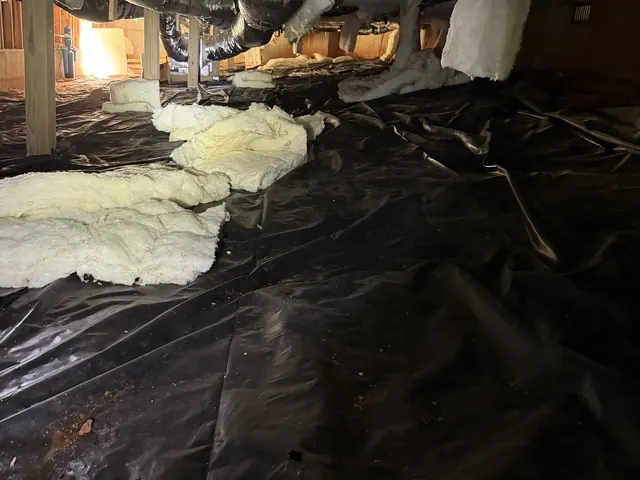
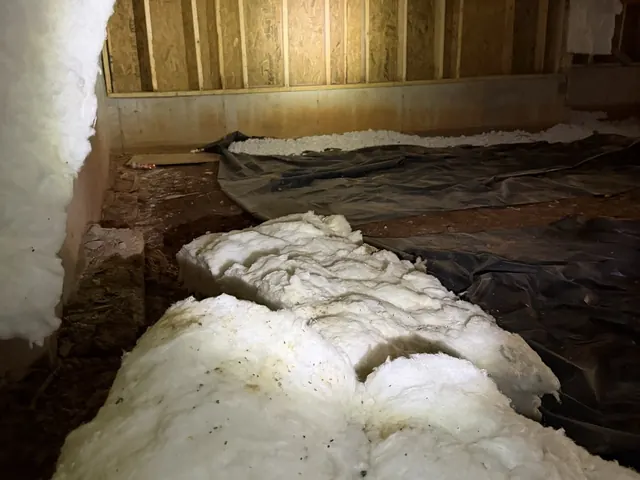
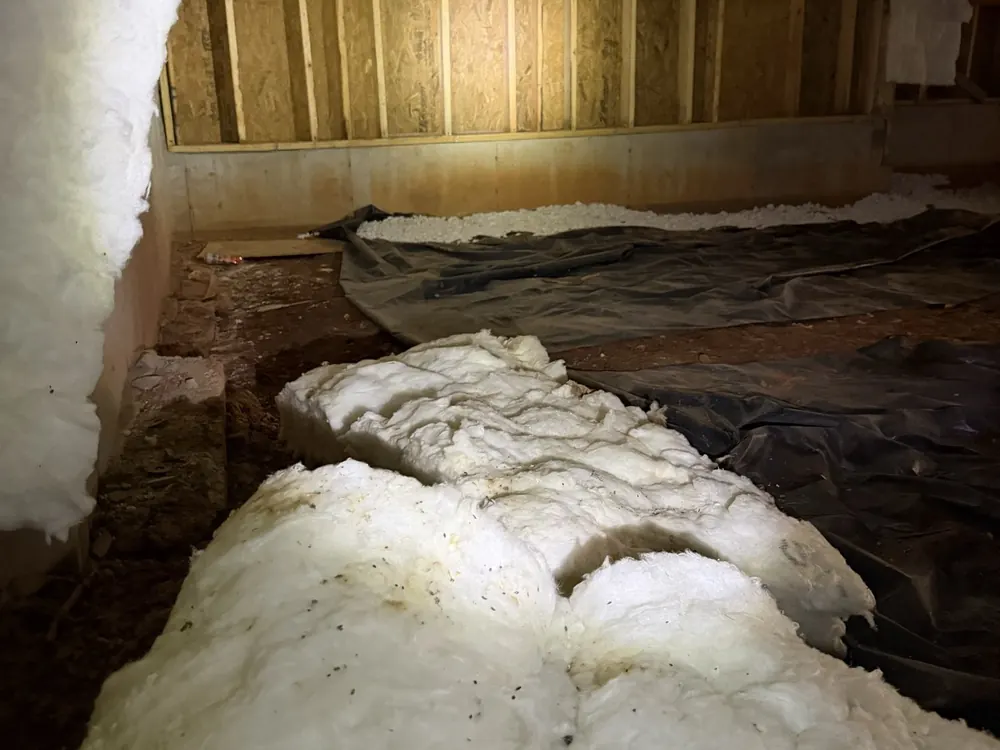
Crawl space insulation falling out of the floor joists is a moisture report, not a stapling failure, and putting the same batts back up is the single most repeated wasted job under Georgia houses. Fiberglass holds moisture. Moisture makes it heavy. Gravity handles the rest, and the fasteners and support wires give up under a load nobody ever asked them to carry.
Animals are the other cause worth naming right away. Rodents nest in batts and pull them down, and that is still a moisture story, because the damp is usually what drew them under the house to begin with.
The practical consequence is simple. A floor with its insulation lying on the ground is an uninsulated floor, so the first floor runs colder in winter and the HVAC system works harder to make up the difference.
Why Fiberglass Under a Georgia House Was Always Going to Fail
Floor insulation assumes a dry, vented crawl space. Northeast Georgia does not provide one for most of the year, and that is the whole problem in a sentence.
The mechanism runs like this. Humid air moves in through open foundation vents, meets the cooler surfaces under the floor, and the moisture collects in the one material down there specifically built to trap air. Wet fiberglass loses most of its usefulness as insulation while gaining real weight, so it fails twice at the same time.
Then it sags. Sagging opens a gap between the batt and the subfloor, and now humid air sits directly against the wood with a wet blanket holding it there.
Crawl Space Doctors does not install fiberglass in crawl spaces. That is a position about where the material belongs, not a complaint about who made it.
Want to know what brought yours down? A free inspection answers that. Book online.
The Questions Homeowners Ask When the Insulation Comes Down
Can I Just Staple It Back Up?
Physically yes, and it will come down again, usually within a season or two, for exactly the same reason it came down the first time. Support wires and mesh do not solve it either. They hold weight, and weight was never the underlying issue. This is the most common do it yourself job in a crawl space and the most commonly redone one. The useful version of that same instinct is to pull the wet material out instead of reattaching it, because wet batts pressed against wood keep the wood wet.
Is the Fallen Insulation Damaging My Floor?
The insulation is not the damage, it is the evidence. What those batts were holding against the subfloor is the actual concern. Look for dark staining on the subfloor and the joists, wood that feels soft or spongy at the edges, and visible growth on framing. Describe what you see and where you saw it, photograph it, and leave it alone. Do not probe it, scrape it, or start pulling at boards to find out how far it goes. That is what somebody with a light and a plan is for.
Should I Insulate the Floor or the Foundation Walls?
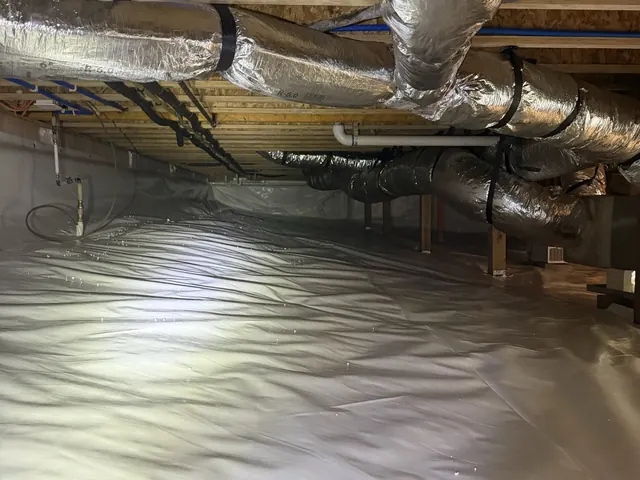
This is the real decision hiding under the question everybody asks. Insulating the floor treats the crawl space as outside. Insulating the foundation walls treats it as part of the house. In a humid climate with a sealed crawl space, wall insulation with the space conditioned is the approach that stops fighting the weather every single day. The sequence matters though, because sealing has to come first. Wall insulation in a vented crawl space is just a new surface for moisture to collect on. None of this is universal, which is what an inspection is for.
What Should the Insulation Be Replaced With?
Think about the assembly rather than the product. Ground covered, air sealed, insulated at the walls, then humidity controlled, in that order. Removing the old material is less glamorous than it sounds: bagging out wet batts, clearing what has already fallen into the dirt, and hauling it off. Nothing new goes up until the water problem and the air path are handled, because otherwise the replacement insulation has precisely the same future as what came down.
Will Fixing This Make the House Warmer This Winter?
A first floor sitting over a crawl space with its insulation on the ground is losing heat through the floor, and correcting that gets noticed most in the rooms above the worst areas. What we will not do is put a number on it. A sealed and controlled crawl space is a comfort and durability project first, and any comfort gain depends on the house. What we can say plainly is that this is work worth doing before the cold months rather than in the middle of them.
Getting Someone Under There Before You Buy Insulation
Buying batts before anyone has diagnosed the moisture is buying the same job twice. That is the entire argument for doing it in this order.
The free crawl space inspection looks at where water enters, the condition of the ground cover, the state of the framing above the fallen material, and whether the space should be sealed. You get a written, no obligation quote if work is warranted. No charge for the inspection, no pressure.
Serving Athens, Madison, Monroe, Watkinsville, Gainesville, Augusta, Elberton and Hartwell. Book a free inspection.
FAQs About Crawl Space Insulation Replacement
Q: Does homeowners insurance cover crawl space insulation replacement?
A: Usually not, because gradual moisture damage reads as maintenance rather than a covered event. A sudden failure such as a burst pipe is a different conversation to have with your carrier.
Q: How long does it take to remove old crawl space insulation?
A: It depends on the size of the space, the headroom, and how much has already fallen into the dirt. Removal is usually the first day of a larger project rather than a standalone visit.
Q: Can insulation be left out entirely in a sealed crawl space?
A: In a sealed and conditioned crawl space the insulation moves to the foundation walls rather than disappearing. The floor above no longer has to be treated as an exterior surface.
Find Out What Brought It Down First
Book the free crawl space inspection and get the moisture answer before you spend a dollar on insulation. Book a free inspection. No obligation, no pressure.